
continuation of the Tipperary House article
A Reflective Compendium of Thoughts
I like to remember as well that the Druids and “Celts” of the British Isles or a better name perhaps is the Anglo-Celtic Isles, were the indigenous people that wrote poems and stories, made music and pictures.
They were the wise ones, they did healing and practiced well-being, which bypassed the mind, and connected straight to the heart.
It must be mentioned that they weren`t actually called Celts (a semi-political name) until the 18th century.
Celts is a word used to describe many tribes of people who lived during the Iron Age. None of the Classical texts refer to the peoples of Britain and Ireland as Celts. Therefore, as the “Celts” were a collection of tribes, they were more generally known by the name of those tribes or societies as opposed to a collective nation or empire. British archaeologists have become increasingly dissatisfied with the idea of Celts invading Britain and Ireland, and of a ‘Celtic’ society sharing language, art, religious belief and identity. There is little conclusive evidence amongst the archaeological remains for large-scale arrivals of a new people from the Continent. The archaeology of the Iron Age in Britain and Ireland is suggesting a mosaic of regional societies, each with their own distinctive identity.
This is at considerable odds with a uniform Celtic culture.
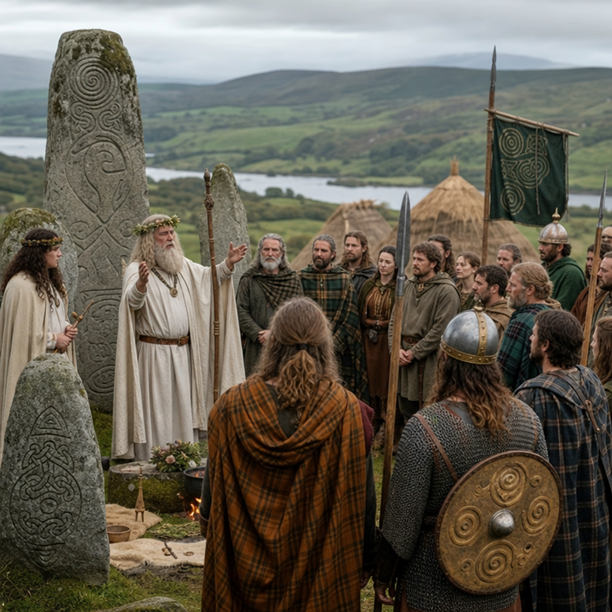
And in my view, “British” is a fully political term which was born in the 18th century too and revamped and encouraged and promoted again in the late 20th and early 21st century and is a legal definition, and multicultural. It’s not an ethnicity, it is culturally or intellectually ‘imagined’, and can be a layered identity that includes other cultures and heritage, as well as a shared sense of national identity based on culture, history, and values. It is positive and uniting.
Of course it has practical and positive use too as a way of living and a state of mind in helping people to integrate into the social fabric of our society, it is about coexistence. It’s about mutual respect. It’s about shared belonging, and feeling a sense of attachment, and connection and a degree of loyalty.
This outlines an inclusive, civic understanding of national identity. It frames being “British” not merely as an ethnic background or a geographic label, but as a shared social contract based on mutual respect, active integration, and a collective commitment to the community fabric.
Therefore, the truth is that the name “Celts” is a ‘modern’ and `semi-political` name and is used to collectively describe the many original, indigenous and distinct and inter-related tribes and traditional society of people living during the Iron Age in Britain and Ireland and later as well through history, and of course through their descendants.
These people were originally Iron Age islanders and like their very close cultural cousins, the Angles, Saxons, Normans and Norse – for many of us, they are an important part of our ancestry and multi-ethnic heritage and who we are today.
Their spirituality was not always a separate, structured religion as it would be understood today, but rather a set of ideas, customs and beliefs that influenced everything from daily activities to warfare, involving rituals, magic, and a reverence for nature.
The “Celts” moved the good people towards transparency and the truth – that eternal, never-ending struggle between what is right and that which is wrong, the enduring human quest for moral integrity, transparency, and truth which is so very important and especially relevant now in the times we live in 2011 ! !
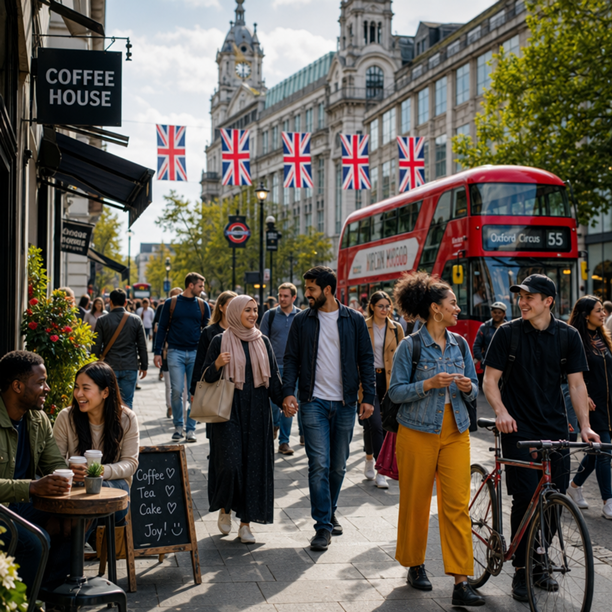
Coming back to modern times – Heritage is important as it helps us examine our history and traditions and enables us develop an awareness about ourselves whatever that might be for each one of us – given our different backgrounds and history and whatever heritage we hold whether it be European, African, Asian or whatever, and any combinations of these !
Sometimes we have to reclaim our heritage by actively restoring, preserving, and celebrating our cultural identity, history, and traditions that may have been previously suppressed, marginalised, or lost.
Heritage can help us understand and explain why we are the way we are – both the good and the bad points perhaps, and the influences our culture plays in important roles in our politics, society, business and our world view.
Learning the history of our ancestors helps us gain a greater understanding of the challenges they faced, and it also often inspires greater love and compassion for their undesirable qualities and mistakes.
Therefore, I say as a cultural enthusiast, it is important to protect our heritage and the heritage of others as it adds character and distinctiveness to where we are and provides a sense of identity both tangible as well as intangible creating a positive influence on many aspects of life for ourselves and others today.
We will know that ALL the peoples of the world are indeed similar, equal, inter-connected and are ultimately ONE (one humanity) with many wonderful and varied cultures and heritage from different parts of the world.
Blending Family Constellation Work with social justice often provides a vital pathway to heal hidden relational burdens, honour excluded ancestors, and foster equitable treatment across diverse kinship networks.
- Acknowledge Excluded Ancestors: Bringing marginalised or rejected family members back into the system’s “heart.”
- Restore the “Order of Love”: Ensuring that every member of the family system is recognised and honoured in their rightful place.
- Release Inherited Grief: Releasing burdens that do not belong to the current generation, allowing for personal and systemic peace.
Heritage, Culture, and Social Justice
In Ireland, the Land Acts offered Catholics eventual liberation from extortionate rents and arbitrary evictions.
However, the changes were extremely difficult requiring decades of protest and uprisings, boycotts, and violent clashes known as the Land Wars. Tenant families lived in deep poverty and insecurity before finally gaining state-backed subsidies to purchase their own farms.
For the Protestant Ascendancy (the Anglo-Irish landowning class), the Land Acts were devastating. The sweeping legal reforms systematically dismantled their centuries-old estates, transferring land ownership to the native Catholic smallholders.
The impacts were severe causing financial ruin, violence and destruction and social and political isolation. Everyone suffered !
Between 1911 and 1926, the Protestant population in the “new” Ireland plummeted by over 30%. Many relocated to Great Britain, and others further afield.
Economists and historians have proposed and debated several alternative approaches over the years that could have mitigated this hardship for both sides.
Many of them have been positive ideas, and interesting.
However, addressing the historical context of land rights in Ireland offers deeper insight, and creative thoughts into how other alternative policies might have unfolded.
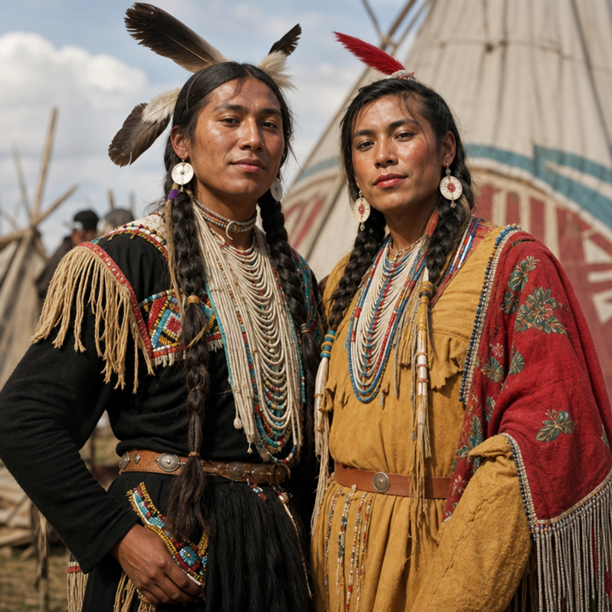
Perhaps as a complete alternative solution, I offer the following thoughts from a Native American perspective to readers.
I have always admired Native American cultures since I can remember for their profound, sustainable reverence for the Earth, deep community and generational bonds, and rich oral storytelling. Their enduring resilience and commitment to living in harmony with the natural world offer timeless, universal lessons.
Let us explore that more:
I think Native American approaches to the Irish Land Acts and sectarian conflict would likely have replaced the British system of private property and religious division with communal land stewardship, consensus-based governance, and an emphasis on kinship, and emotional, and social bonds over sectarian identity.
Here is how Native American political and cultural philosophies might have addressed these issues:
- The Native Perspective: Most Indigenous American societies viewed land as a shared, sacred resource to be stewarded by the community, rather than a commodity to be bought, sold, or rented.
- Handling the Irish Land Acts: Instead of transitioning Irish tenant farmers into individual private landowners (as the Land Acts attempted), Native governance would likely have abolished the landlord class entirely. They would have placed the land in the hands of the community or clans to be managed collectively, ensuring that every family had access to the resources needed to survive without the burden of debt or rent.
- The Native Perspective: Indigenous cultures often resolved deep tribal or factional disputes through Council Fires, consensus-building, and shared spiritual practices rooted in the natural world.
- Bridging the Divide:
- Consensus over Majority Rule: Native governance relies on unanimous consensus rather than majority rule, forcing all parties (in this case, Catholics and Protestants) to negotiate until a solution benefits everyone.
- Redefining Identity: Rather than identifying primarily as Catholic or Protestant—labels heavily tied to religious and colonial history—Native leadership would have emphasised a unified identity as “people of the land” or “people of Ireland”.
They would likely have integrated the spiritual traditions of both groups into a broader, shared respect for the local ecosystem and community welfare.
- The Native Perspective: Indigenous political structures historically resisted top-down, authoritarian rule, favouring decentralised, egalitarian councils.
- Handling the State: To stop the divide, a Native approach would have dismantled the British colonial structures that favoured one religion over the other. By eliminating state-sponsored churches and colonial favouritism, both Catholics and Protestants would have been placed on equal footing, removing the political incentives for sectarian violence, and family breakups, and the fracturing of societal ties.
Fairness and justice needs to grow more in all societies in the modern world today, and develop through evolving humanity with cultural, and behavioural shifts where needed to advance universal respect, dignity, and justice for all to support this improvement to modern equality. Ideally, all human beings should all be treated equally.
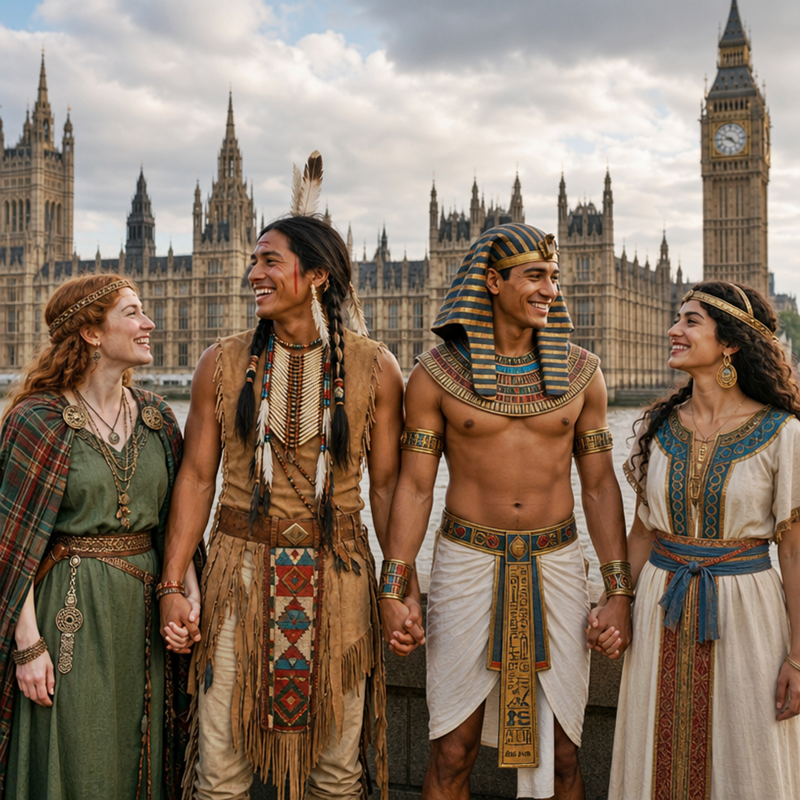
Older civilisations offer vital lessons on equality by exhibiting the foundational roots of law, exercises in direct democracy, and the consequences of wealth imbalances. They showed respect for different peoples through diplomatic alliances, cultural exchange, and policies of inclusion. Examining both their triumphs and their societal collapses helps us understand how systemic inequalities shape the longevity of human societies.
Rather than being purely transactional, family units served as the emotional heart of ancient societies with extensive physical affection, and deep intergenerational bonds. These practices ensured that families remained tightly knit, and relatives received extensive support.
We can learn so much from aspects of ancient civilisations where the ancient Celts teach us about equality through their uniquely empowered societal roles for women, who could own property, divorce, and lead armies. Regarding tolerance, their interconnectedness and spiritual agency in all things, and their unforced blending of distinct cultures, beliefs, or ideas allowed them to integrate diverse ethnic, folk, or native gods.
This worldview fosters an open-minded, contemplative approach to life, allowing space for multiple perspectives without dictating a singular, rigid dogma.
Then Native American Two-Spirit traditions offer vital historical evidence that diverse genders and sexualities were respected long before European colonisation. Centering these Indigenous frameworks challenges rigid Western binaries, demonstrating that gender diversity is a natural, respected, and vital component of community functioning rather than an anomaly.
- Zuni (Southwestern Pueblos): The Zuni recognised the lhamana, a third-gender role. A notable historical figure was We’wha, an influential Zuni cultural ambassador and artisan who seamlessly integrated both male and female societal roles.
- Lakota: The Lakota acknowledge individuals known as winkte, who were historically revered for possessing both male and female spirits. They often served as spiritual leaders, healers, and caretakers of tradition.
- Cheyenne: The Cheyenne recognised individuals known as hemaneh, who were celebrated for their unique ceremonial roles, healing abilities, and ability to bridge the perspectives of both men and women.
While colonisation and missionary efforts severely suppressed these traditions, causing many to go underground to avoid violence, modern reclamation efforts are underway. Today, the pan-Indigenous term “Two-Spirit” is embraced by many LGBTQ+ Native people to reclaim these ancient teachings and foster inclusive, diverse communities.
Ancient Egypt stands out in history for its remarkable legal and social egalitarianism, offering a sophisticated society where women enjoyed substantial property, commercial, and divorce rights. Furthermore, the civilisation was defined by cultural assimilation rather than modern ethnic classifications, establishing a powerful model for integration.
Not forgetting the Minoans who did not create a modern, utopian democracy, they developed one of the most uniquely egalitarian and woman-empowered civilisations of the ancient Bronze Age. Their society featured relative parity between genders, wealth distribution, and a notable absence of heavily fortified, militaristic rule. Their bronze-age civilisation was uniquely peaceful.
Our human collective potential is an ongoing project, relying on continuous, intentional effort from everyone.
- Inclusive Progress: Ensuring that as we grow, the benefits and opportunities are accessible to all, not just a few.
- Active Empathy: Listening to and understanding diverse perspectives to bridge divides and foster genuine collaboration.
- Sustainable Action: Making choices today that positively impact the environments and communities we all share tomorrow.
Ultimately, realising that “the sum of us” means recognising that every individual’s growth contributes to the strength of the whole.
As Confucius is reputed to have said: “Study the past if you would define the future” – a timeless proverb.
Religion and Culture
I do see religions as part of an interconnected network of elements that shape how a society understands the world and governs behaviour.
In my opinion, it is a specific component within culture.
Religions are really about ideas through a specific system of beliefs, rituals, and moral codes focused on the worship of a divine power, a diety or higher force. They have some very positive features to them sometimes, but not always especially when they are used to justify discrimination, exclusion, or harm against others. They also cause detriment when they promote extreme guilt and fear.
Culture is the broader way of life for people, encompassing language, art, music, social habits, behaviour, and traditions.
Of course, the interplay between faith and culture is profound, with culture continuously absorbing, adapting, and reflecting religious traditions. Even in highly secular societies, faith-based elements remain deeply embedded in everyday life, shaping social norms, moral frameworks, and historical identities.
Religion can influence culture and culture continuously influences how religious beliefs are practiced and understood.
You can have a variety of religious faiths or none within a culture.
Whether religion is a choice for people depends on how you approach belief and identity. In modern pluralistic societies, many people treat religion as a conscious lifestyle choice or a personal spiritual preference.
Evaluating and discerning whether to continue with a particular religion or belief system is a deeply personal and often challenging journey. This process typically involves weighing personal values, examining historical and theological claims, and considering the impact of those beliefs on your overall well-being.
The principle that religion should remain a personal matter of conscience, free from coercion and judgement of others, is a widely held ethical and civic standard. It aligns closely with fundamental human rights, which protect individual freedom of thought, conscience, and religion while shielding everyone from forced practices.
Indeed, the separation of church and state such as in the United States, France and Japan serves as a foundational pillar for protecting freedom of conscience and preventing state-sponsored discrimination.
By strictly separating government operations from religious institutions, nations prevent the imposition of sectarian beliefs onto non-believers, ensuring that laws apply equally to all citizens regardless of their faith.
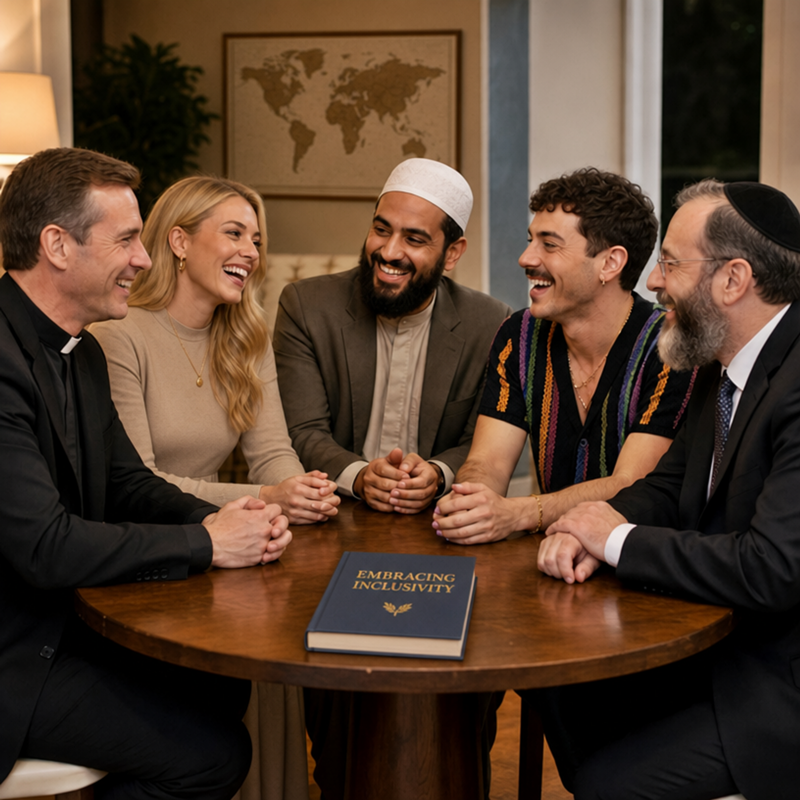
Many faiths, one family: United in love and respect.
Religious beliefs exhibit a duality: while promoting compassion, they can also drive sectarianism and exclusionary politics. Psychologists attribute this to in-group favouritism, where strong shared faith bonds can inadvertently foster out-group hostility and marginalise those holding different beliefs.
These ideologies are very often not about people, or the human spirit but about control, superiority and separation !
Religion and politics rarely mix well because they operate on fundamentally different principles: compromise vs. absolute truth.
Merging the pragmatic, consensus-driven nature of politics with the absolute, unchanging moral codes of religion frequently generates profound societal friction.
- Politics: Operates through negotiation, compromise, and secular laws. It requires balancing diverse, often competing interests to maintain social order.
- Religion: Often hinges on divine, exclusive moral codes perceived as absolute truths. These principles are generally not negotiable through democratic consensus.
Religion is considered a fundamental right, I agree but in my view it must evolve to remain relevant and resonant in a modern, scientifically driven society, and continue to prioritise universal love, forgiveness, and equal dignity as a widely shared goal.
Global interfaith movements and progressive theological changes must continue to push ALL religious traditions to embrace inclusivity, and each other ensuring that women, minorities, other faiths, and non-believers are treated with equal respect, and religion is seen and heard to do that.
I believe this perspective highlights a vital conversation about the intersection of faith, human rights, and modernity.
I am pleased to know the evolution of religious traditions to prioritise universal human dignity, inclusivity, and scientific understanding is a central focus for many contemporary theologians, philosophers, and social activists worldwide, and is ongoing, and continuing.
While historical divisions are a reality, many global efforts actively bridge these gaps today, and must be welcomed, and supported.
Fostering harmony, diversity, and inclusion among all religions is essential for creating peaceful, cohesive, and resilient societies.
It reduces prejudice, builds mutual understanding, and allows communities to thrive together.
"In difference there is unity and in unity there is difference."
“Sa difríocht tá aontacht, agus san aontacht tá difríocht.”
Humanity is the opposite of “ideas” or “beliefs” – it is “feeling” and “nurture”. It is not a set of intellectual constructs, but is a visceral, empathetic drive. This view elevates nurture and compassion as our most fundamental instincts, suggesting that our shared survival relies on the pre-rational conviction that preserving life is universally valuable. and that to live well means being treated humanely in relationships of mutual respect, ones that will best contribute to human welfare and human fulfillment for each and every one of us.
Life is generally viewed as preferable to death because it offers the capacity for experience, connection, and joy.
This comes from a place of deep emotional experience, intuition, or passion, rather than purely logical or volitional thought processes.
This reminds me of features often seen in Eastern traditions like Daoism / Taoism (known as Ziran), where it implies behaving spontaneously and in harmony with the cosmos, free from unnatural familial or cultural conditioning.
- Emotion vs. Cognition: While ideas and beliefs can divide us through dogma, the raw feeling of empathy serves as a universal, pre-linguistic language.
- The Biology of Care: “Nurture” is deeply rooted in our evolutionary biology, where the instinct to protect our young and support our communities ensures the survival of humanity.
- The Affirmation of Life: The profound conviction that “life is better than death” acts as the ultimate unifier, driving altruistic behaviour and mutual support across all cultures.
By practicing empathy within our own communities and extending it across cultures, we break down barriers and build a more compassionate, unified world.
Here are a few ways this understanding translates into everyday life:
- Active Listening: Seeking to understand others’ perspectives and experiences without judgement, especially when they differ from your own.
- Cultural Exchange: Engaging with different traditions, foods, festivals and celebrations, sports and games, learning common phrases, and arts such as exchanging traditional art, music, or dance forms, with genuine curiosity and respect.
- Shared Humanity: Focusing on our common desires—such as the need for safety, love, and connection—which transcend cultural and geographical boundaries.
Knowing and practicing this positive awareness allows us to wake up and become `conscious` again of ourselves, where our spiritual understanding and empowerment of ourselves and respect and embracement of others can only deepen through compassion, with a strong democratic society using a pragmatic ethics approach based on human reason, experience, and reliable knowledge – an ethics that judges the consequences of human actions by the well-being of ALL life on Earth.
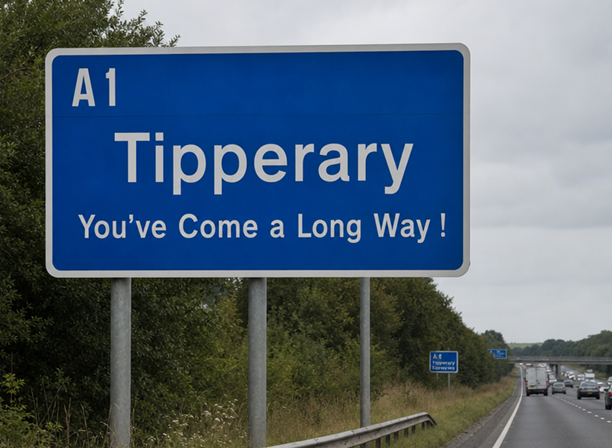
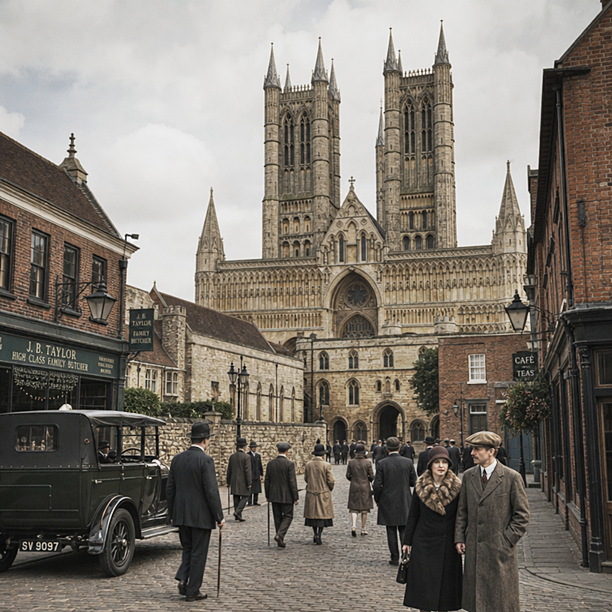
One of the features too of Druid / Celtic cosmogony is inspiration from the sacred land and from ancestry whose myths and mysteries are our wellspring together with the power of place.
Certain places possess power that is curative and regenerative.
This power of place in Ireland and the “Celtic” World is an essential element of the sacredness of the holy well and I believe I have found mine here which I want to share with people and where I wish to continue my work to help, heal, restore, support and ultimately empower others.
Grantham, and particularly Lincolnshire and the Fens as a whole nestled between the Humber and the Wash and the River Witham which rises south of Grantham close to South Witham and flows into The Haven, a tidal arm of The Wash, near Frampton Marsh is without doubt, one of the most spiritual places you could visit with its quiet, expansive landscapes ideal for reflection, and a vibrant community of modern spiritual centres, alternative healing retreats, and ancient folklore.
Lincolnshire is spiritually significant due to its deep Christian heritage – being the birthplace of Methodism through its founders – brothers John and Charles Wesley who were born in the Lincolnshire town of Epworth.
Lincolnsire is also home to majestic medieval architecture like Lincoln Cathedral (the Cathedral Church of the Blessed Virgin Mary).
It was famously the tallest building in the world for over 230 years (1311–1549) after a massive central spire brought its total height to 525 feet.
It was commissioned by William the Conqueror and consecrated in 1092.
There are also perfectly preserved timber-framed manor houses, for example Gainsborough Old Hall which is the foremost example of a perfectly preserved, timber-framed medieval manor house in Lincolnshire. Built around 1460 by the noble Burgh family, it is celebrated as one of the largest and most complete surviving medieval manor houses in the UK.
I also love how the county of Lincolnshire embraces the seasons, and nature, and has so many weird and scary stories to share around the fireside in the autumn and winter just like in Tipperary creating a primal, cozy atmosphere that naturally fosters deep human connection which is perfect for bonding and reflection.
If you get a chance, come here and find that delicate special magic for yourself.
Just sharing two more poems with you all collaboratively composed for this article – “Beannachtaí iomadúla chuig gach duine”.
Beneath the Oak and Ash
Where rivers sing and ancient spirits flash,
The Druids saw a single, binding thread,
Connecting the living, the future, and the dead.
In every wind that bends and softly flows,
They heard a sacred pulse, a living soul,
Where every fragment makes the forest whole.
They mapped the varied beauty of the earth.
No soul an anomaly, no path estranged,
But vital threads within a world exchanged.
A glowing fire to guide us through the dark.
Together woven, diverse, and understood,
They built a thriving, balanced brotherhood.
Love’s Essential Need
Must fan the flame of newer fires,
As global interfaith unites,
To champion universal rights.
The sacred paths we hold so dear,
Must all evolve to banish fear.
The divine in all humanity.
Where women rise to guide and lead,
And minorities are fully freed.
No longer pushed to margins dim,
But celebrated, heart and limb.
Are welcomed in the morning’s rays.
And those who choose the path of thought,
Unbound by prayers our lips were taught,
Find equal honour, love, and grace,
Within our circle’s wide embrace.
As justice now extends to all.
For every faith, both old and new,
Must push to let the truth shine through:
That every soul, and every creed,
Is bound by love’s essential need.
 If you have managed to have read this article all the way through and enjoyed the numerous aspects to my story of “Tipperary House” here – well done and thank you !
Merry Christmas 2011 and a Happy New Year 2012 (Nollaig Shona agus Athbhliain faoi Mhaise Daoibh) from us here in “Tipperary House” in Grantham who have just arrived here from North-West London which all seems a bit scary, and such a BIG change for Chris and I !


Ní tá teach sa bhaile mura bhfuil sé ar bia agus tine don aigne chomh maith leis an gcomhlacht !!
Bí Bheannaigh.
© Written at Christmas in 2011 by Dr. Michael G Millett, Elevated Therapy ®. All rights reserved